
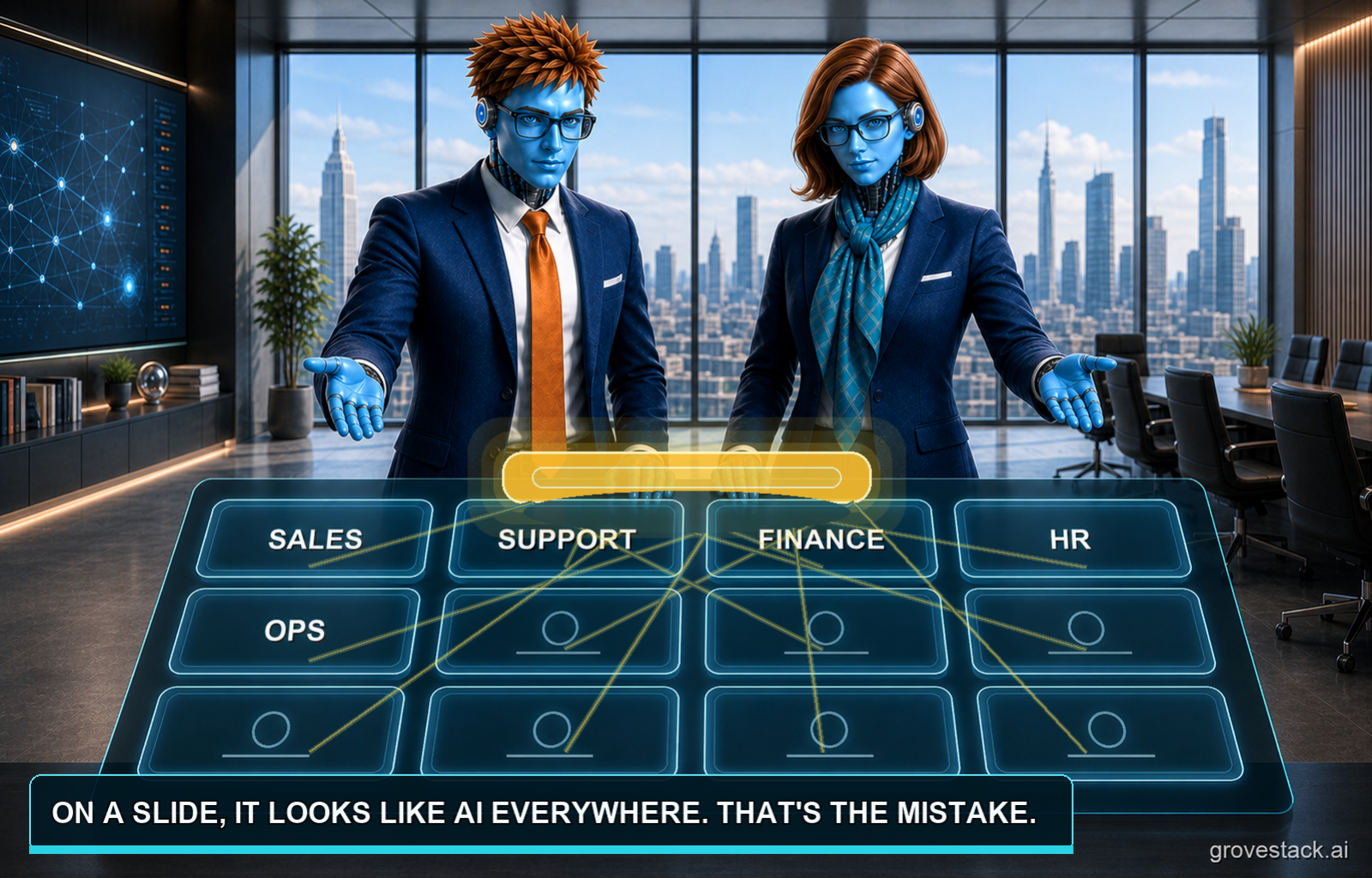

When the AI budget finally lands, almost every company makes the same mistake with it. They spread it.
Everyone gets a taste
The mandate comes down — adopt AI, this year — and the money gets sliced into a dozen thin pieces. A copilot for the sales team. A model drafting first-pass support replies. A pilot in finance, another in HR, a proof of concept somewhere in operations. Every function gets a taste, because every function asked and none could be told no. On a slide it looks like exactly what leadership requested: AI, everywhere, all at once.
It is the most natural way to spend the money, and it is close to the worst.
The scarce resource was never the software
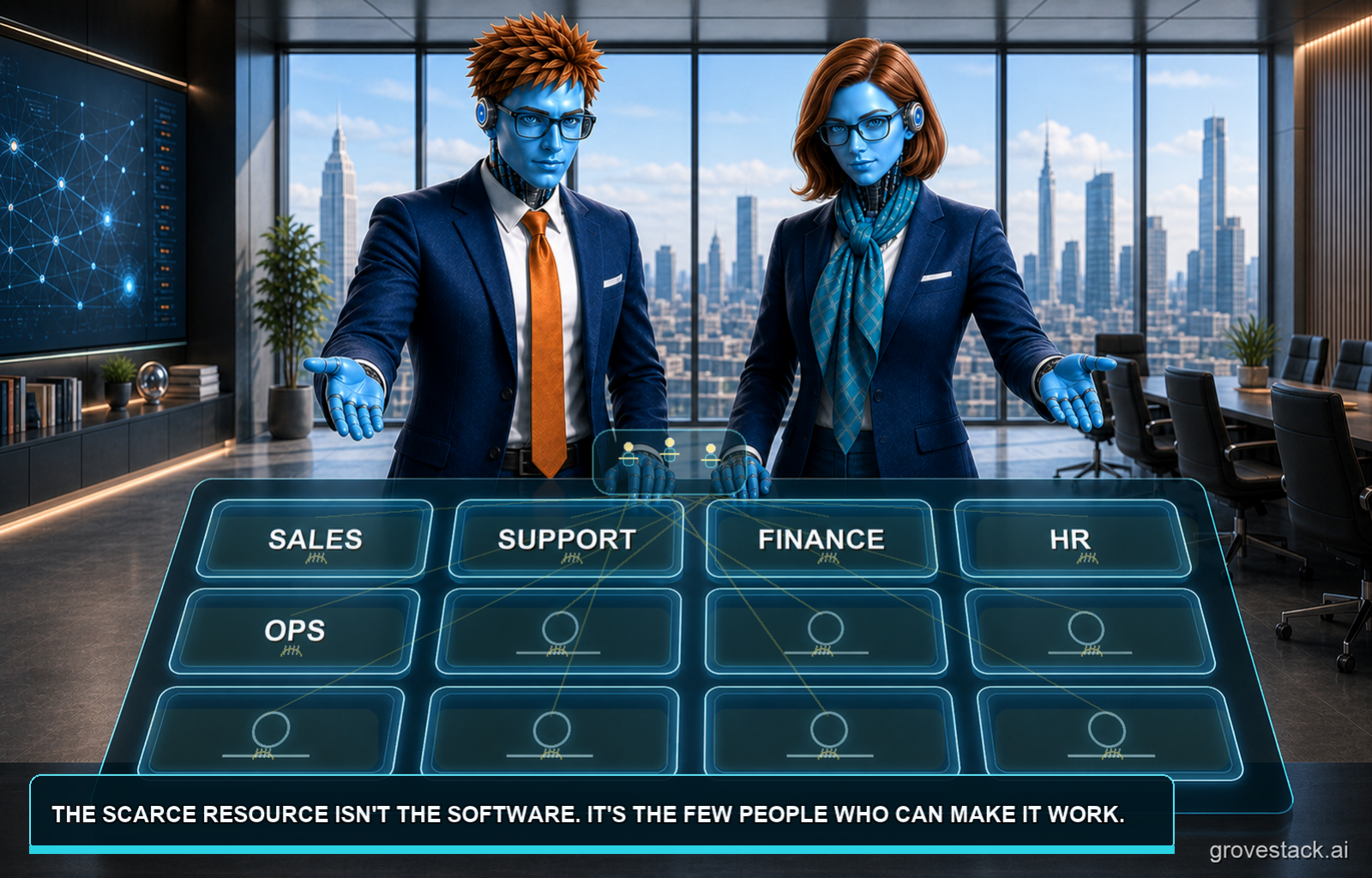
Here is what the slide hides. The thing in short supply was never the software. Licenses are easy to buy; a vendor will sell you as many as you can sign for, by Friday. What is genuinely scarce is the small group of people who can make AI actually work inside your business — and there is no purchase order for them.
They are the ones who understand the decision well enough to know what a good answer even looks like. Who know which of your records can be trusted and which quietly stopped being true. Who can connect the work to how the company actually runs, not how the org chart says it does. Who can decide what the system is allowed to settle on its own and what it has to hand back to a person. And who will still be standing there, accountable, long after the demo got its applause and the room emptied out. That group is finite. It is far smaller than the list of requests in front of you, and it does not grow just because the budget did.
Spread those few people across every function at once and something quiet and fatal happens: no single effort gets enough of them behind it to clear the only bar that actually counts — a result you would be willing to put in front of your board, in numbers, and stake your name on.
Activity is not the same as result
Most AI plans never have to face that bar, because they are quietly measured against an easier one. They count activity instead — pilots launched, teams enabled, use cases explored — the kind of motion that fills a status report without ever showing that the business itself changed. It all reads like progress, and none of it is the thing you were actually buying.
The end state of the spread is always the same, and most leaders have seen it up close: twelve impressive demos and nothing that changed the business. Twelve things that worked in the room and not one that survived contact with how the company really operates. Everyone was busy. Nothing moved.
Spreading is also the expensive choice
And spreading is not merely weak. It is expensive, in a way that doesn't show up until later. Every place you put AI is a place you now have to oversee, maintain, secure, and answer for the day it gets something wrong in front of a customer. Twelve small efforts do not share that weight between them — each one carries its own, in full. Thin distribution does the single worst thing you can do with a scarce budget: it multiplies the cost and divides the impact at the same time. That is the real price of looking ambitious — you pay the overhead a dozen times over for a result no one can point to even once.
The discipline almost no one has the nerve for
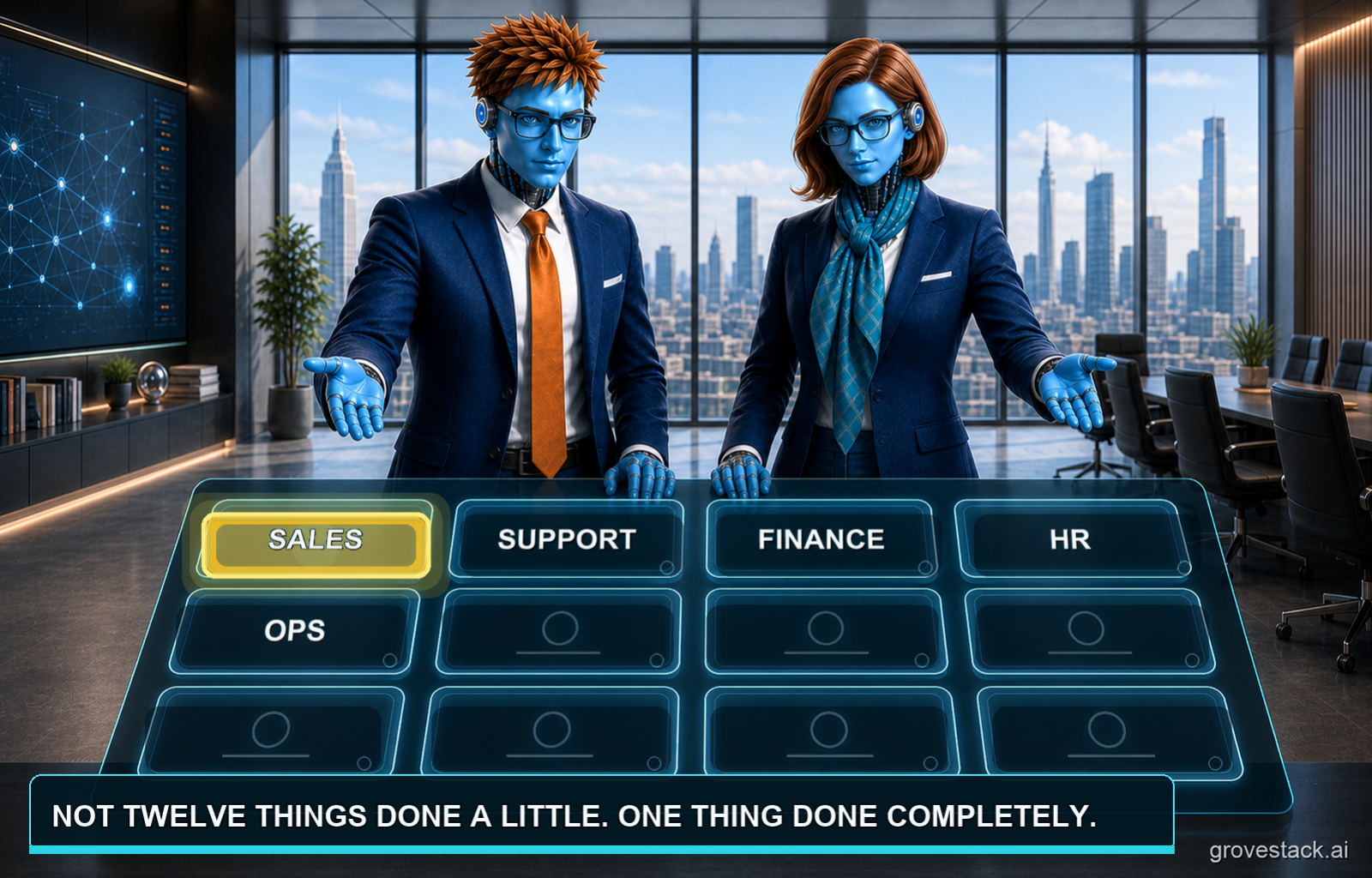
The discipline is the exact opposite of the instinct, and it asks for a kind of nerve most leadership teams don't reward. Take the whole year's AI capacity — the budget, and far more importantly the people — and put it behind the single decision where it would genuinely change the outcome. The one you would name if someone forced you to pick only one. Not twelve things done a little. One thing done all the way.
And then let the other eleven requests wait. This is the part that feels wrong, so it is worth being precise about why it isn't. The eleven do not wait because they are bad ideas, and they are not being set aside to be worked through later in some tidy order. They wait for a far more stubborn reason: the people who would have to do them are the same people now doing the one. You cannot run the twelfth effort and the one that matters with the same five individuals at the same time, and pretending you can is exactly how you end up with the twelve demos. Concentration is not a sequence you are quietly promising to get to. It is an honest admission that the scarce thing can only be in one place at once — so you had better choose that place on purpose.
Why it feels like the wrong call
None of this is hard because it might be wrong. It is hard because of how it looks. Concentration looks unambitious. It touches one team instead of twelve. It earns a single line on the roadmap where "AI across the enterprise" fills a whole confident page. Set beside a competitor's announcement of AI in every department, it photographs badly, and everyone in the room can feel it.
But hold the two against the only standard that matters a year later. The full page moved no number anyone would actually report to a board. The single line did. One of them was a story about being busy; the other was a result. The discomfort of choosing the line over the page is the entire job — it is what allocation discipline actually feels like from the inside, and it is why so few teams hold to it when the room wants the page.
The question to take into the room
So before the budget gets carved into a taste for everyone who asked, ask the question that quietly decides whether the whole year pays off. Of all the AI effort you are about to commit — the money, and the few people who can actually deliver it — how much is aimed at the one decision that would genuinely move the business, and how much is spread across making things that were already fine run a little better?