
Everything your AI answers comes off a desk someone set for it: the files, the records, the current numbers placed in front of it. At a single desk, setting it well is a matter of one person's care. At the scale of a whole enterprise the desk stops being a nicety and becomes the architecture, and choosing what it is becomes one of the more consequential decisions a company will make this decade.
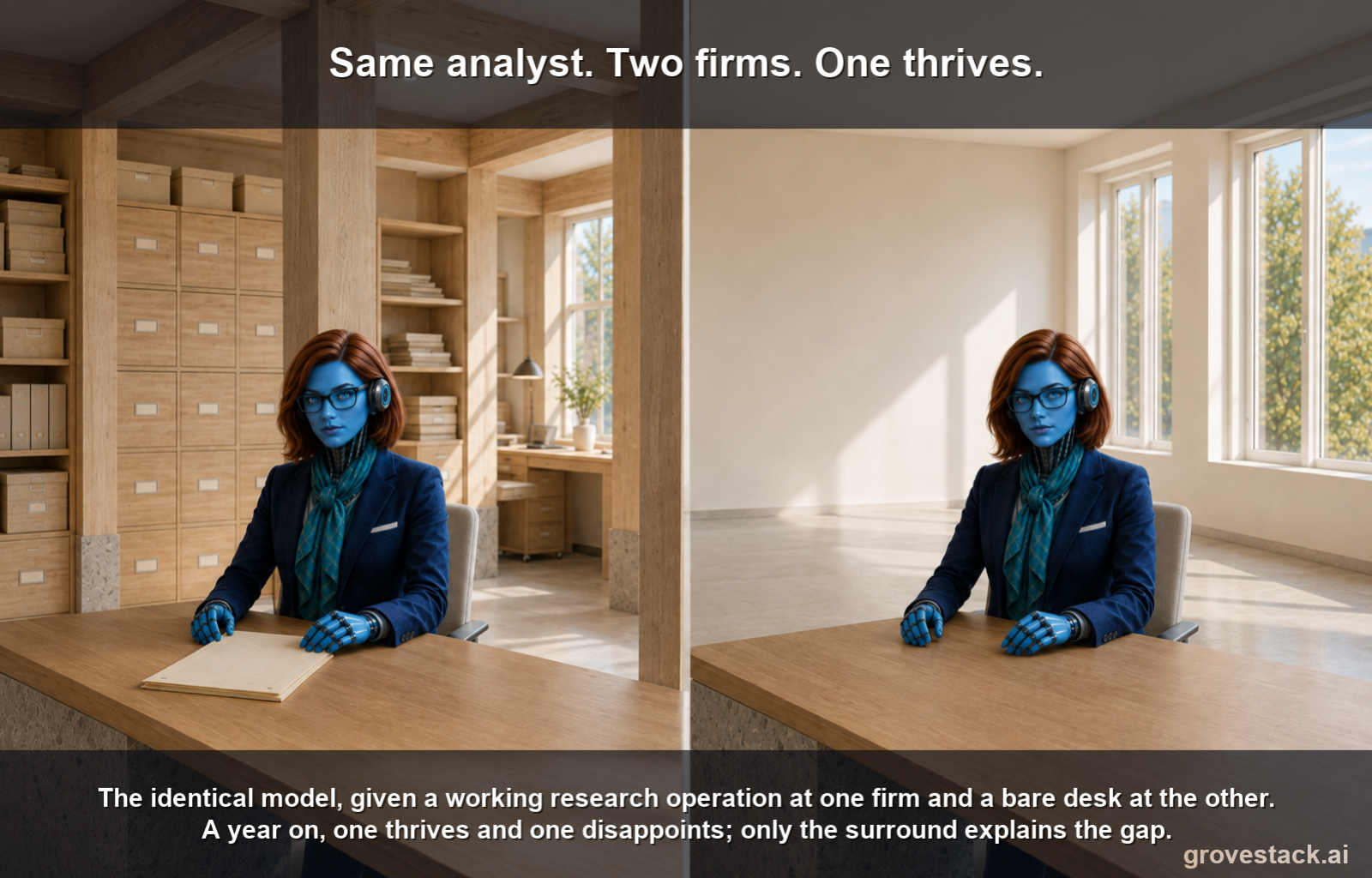
Put it as plainly as it deserves. Two firms take on the same first-rate analyst. Not a similar one; the identical person, the same training, the same instincts, brought in from the same place. The first firm sits them inside a working research operation: records that are current, a function that briefs them before every decision, standards everyone is held to, the memory of what the firm has already worked out kept where it can be reached. The second firm gives them a bare desk and wishes them luck. A year on, one of these analysts looks like the best hire the firm ever made and the other looks like an expensive disappointment, and it is the same person. Nothing about their talent explains the gap. Everything about what was built around them does.
The model is the part you don't control
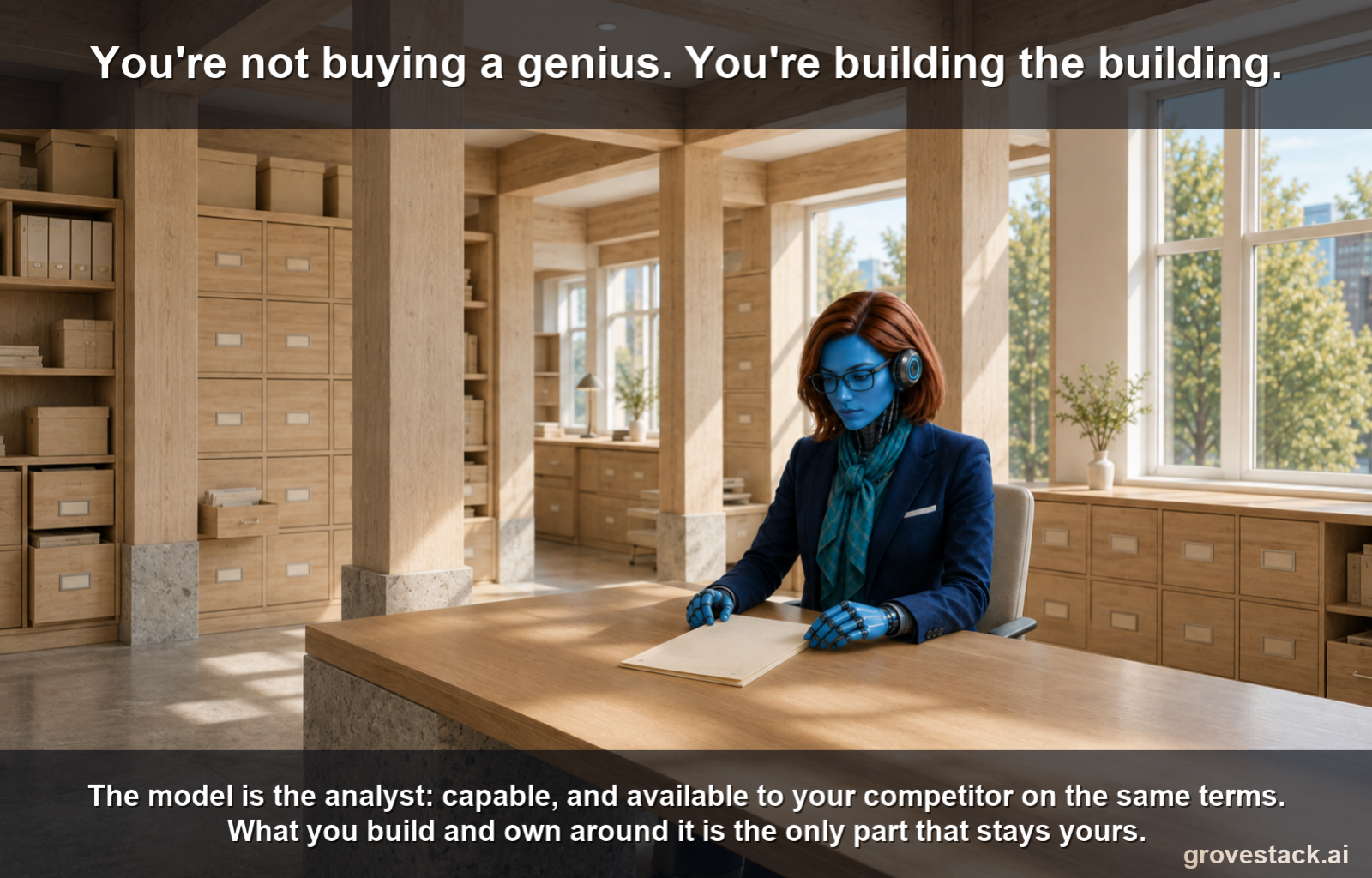
That is exactly the choice in front of a company buying AI, and the analogy holds at every joint. The model is the analyst: genuinely capable, largely interchangeable, and available to your competitor on the same terms it is available to you. You do not build it, you do not own it, and you cannot make yours meaningfully smarter than theirs, because it is the same model. What you build and own is everything around it: the system that sets its desk, the records it draws on, the standards it is held to, the memory of what your company has already decided. That surround is not for sale. It is the part that is yours, the part your competitor cannot buy a copy of, and so the only part where a durable advantage can actually live. You are not buying a genius. You are building the building it works inside, and only one of those is ever yours to keep.
Not a trick, a piece of infrastructure
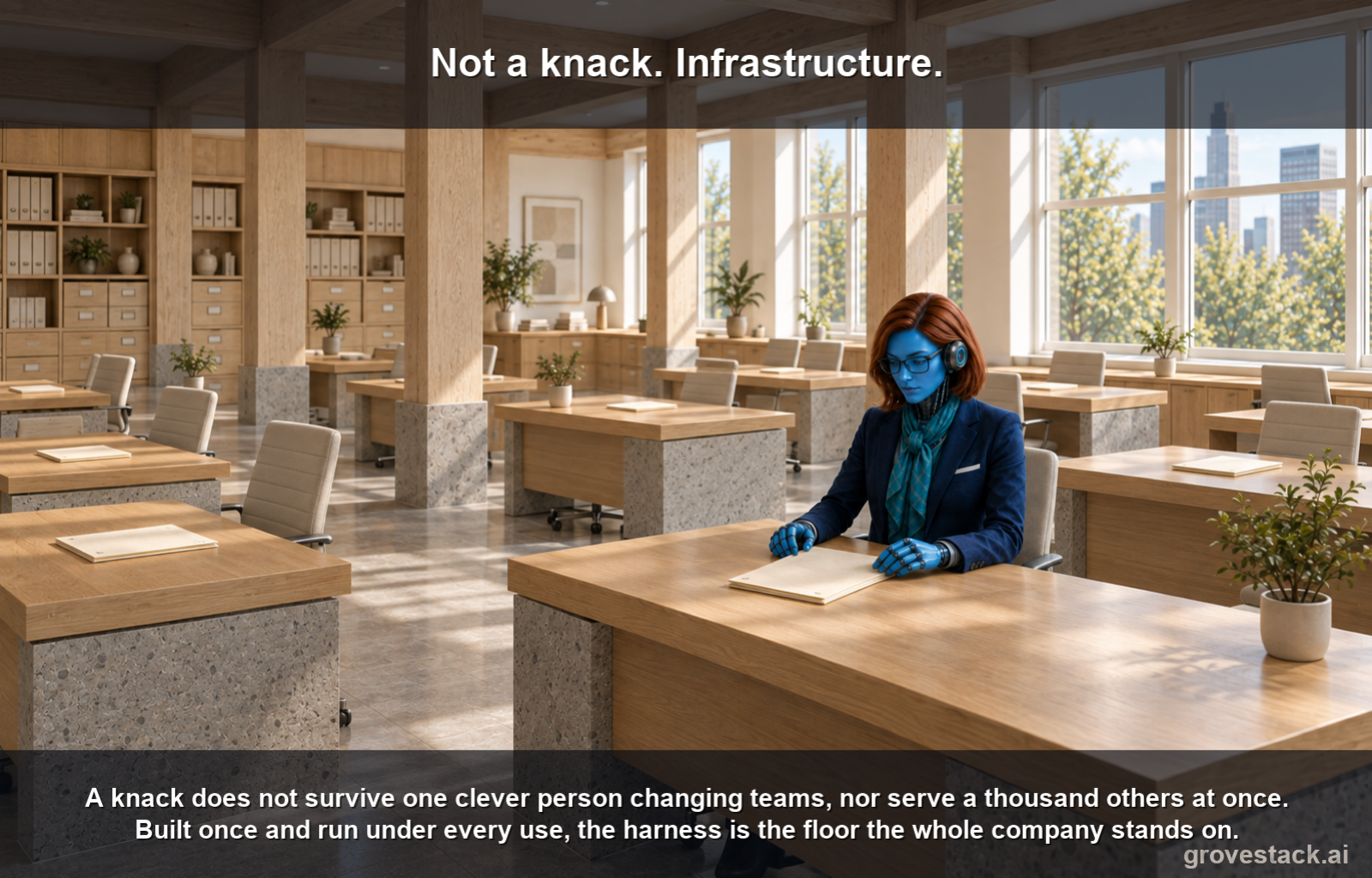
At the scale of one clever user, this looks like a knack. Someone on the team is just good with AI. At the scale of an enterprise it cannot be a knack, because a knack does not survive that person changing teams and does not serve a thousand other people at once. What serves everyone is the same thing that served the one desk, built once and run underneath every use of AI in the company: every question, every team, every day, drawing on the same assembled context and held to the same standards. That is not a feature somebody switches on. It is infrastructure, in the ordinary sense that roads and ledgers are infrastructure: unglamorous, shared, expensive to build, and the thing everything else quietly stands on. A company that treats its harness as infrastructure gets reliability that carries across every use at once. A company that leaves it to whoever happens to be clever gets a scattering of demos with no floor under any of them.
What lasts is the part you built
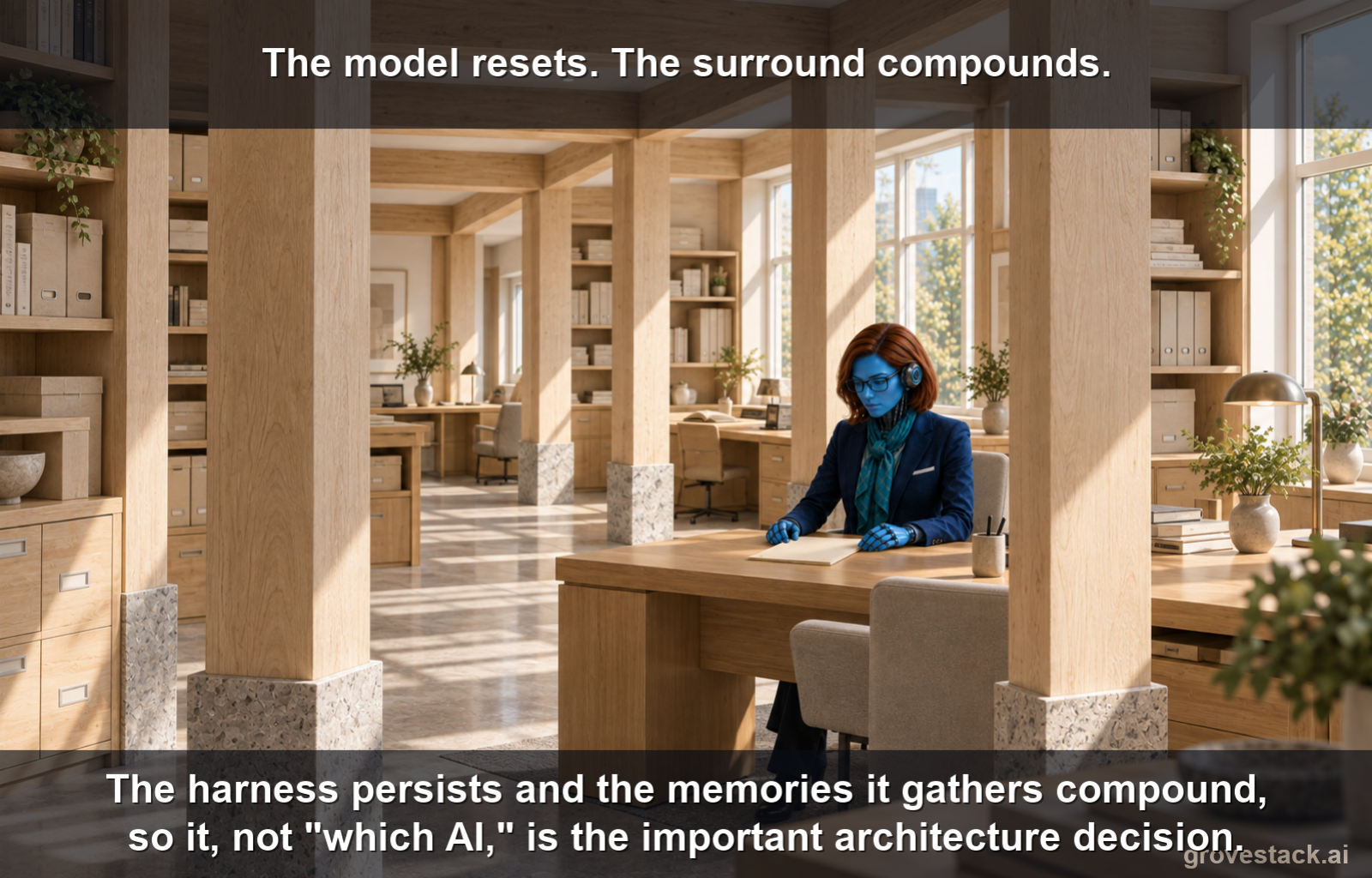
The model you choose today will not be the model you run in two years. A better one ships, the price moves, a vendor stumbles or surges, and you swap it, the way you would change any supplier. If your advantage lived in the model, it leaves when the model does, and it was never really yours to begin with. The harness does not leave. It is the one thing in the arrangement that persists across every model you will ever run, and it holds something no fresh model arrives with: the memory of what your company has assembled, decided, and learned, gathered as context for the next answer and richer every year you run it. A swapped-in model knows nothing of your business on its first day; the harness hands it everything the last one was working from. So the model resets and the surround compounds. That asymmetry is the thing to see clearly, because it points straight at where the decision that matters actually sits. You will spend a great deal of attention on which AI to pick, and that is the part that will not last.
The decision
So the question for whoever owns technology in your company is not which model to buy. It is who is building, and who owns, the system your AI answers from, because that is the thing that will still be yours, and still compounding, long after today's model is three versions out of date.
For the technical version, written for the people who build these systems, see Context Engineering. Up here it comes down to one plain claim, and it is the one to leave with. The model is the commodity; the building around it is the asset. The harness persists and the memories it gathers compound, so it, not "which AI," is the important architecture decision.