
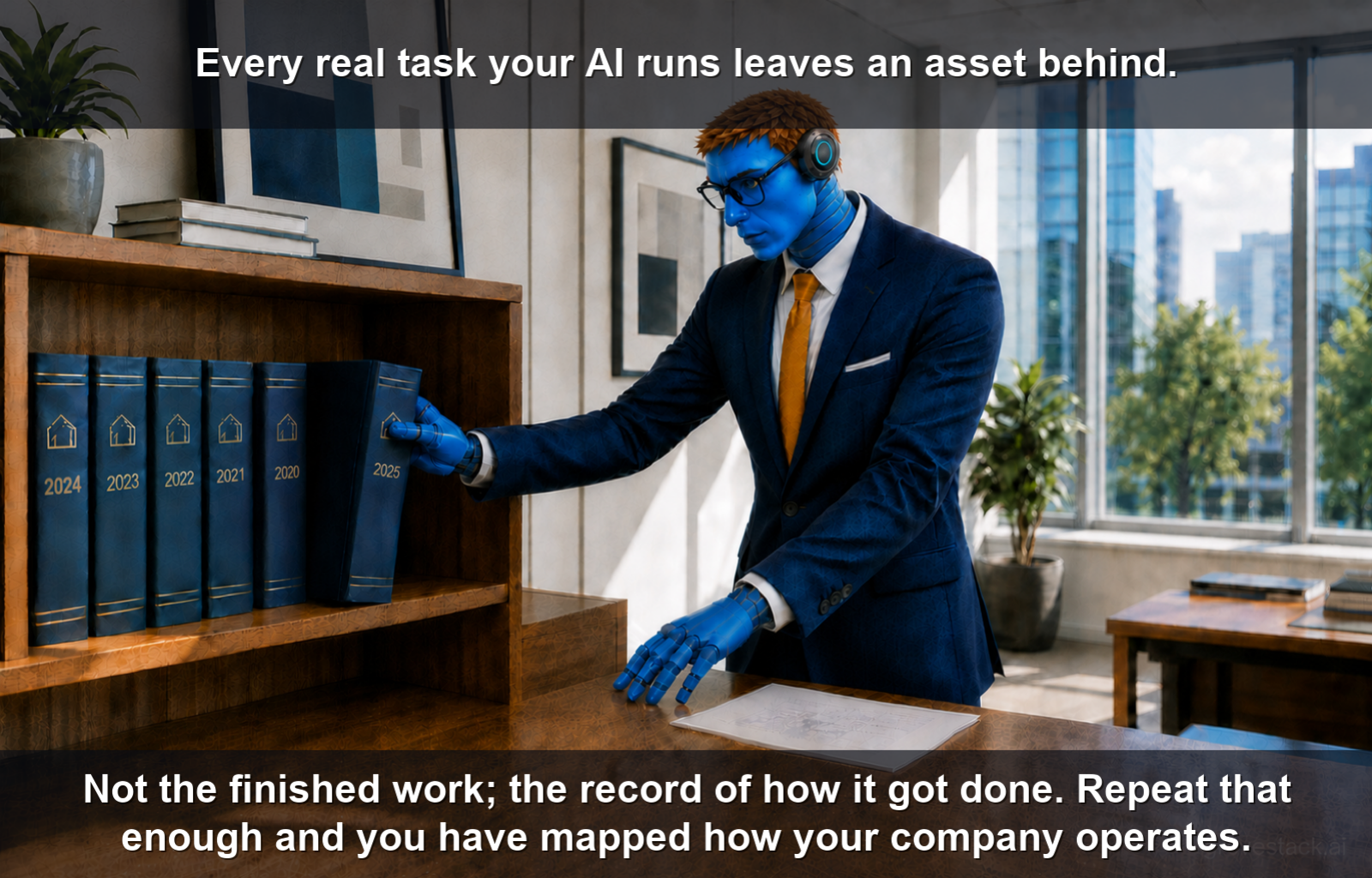
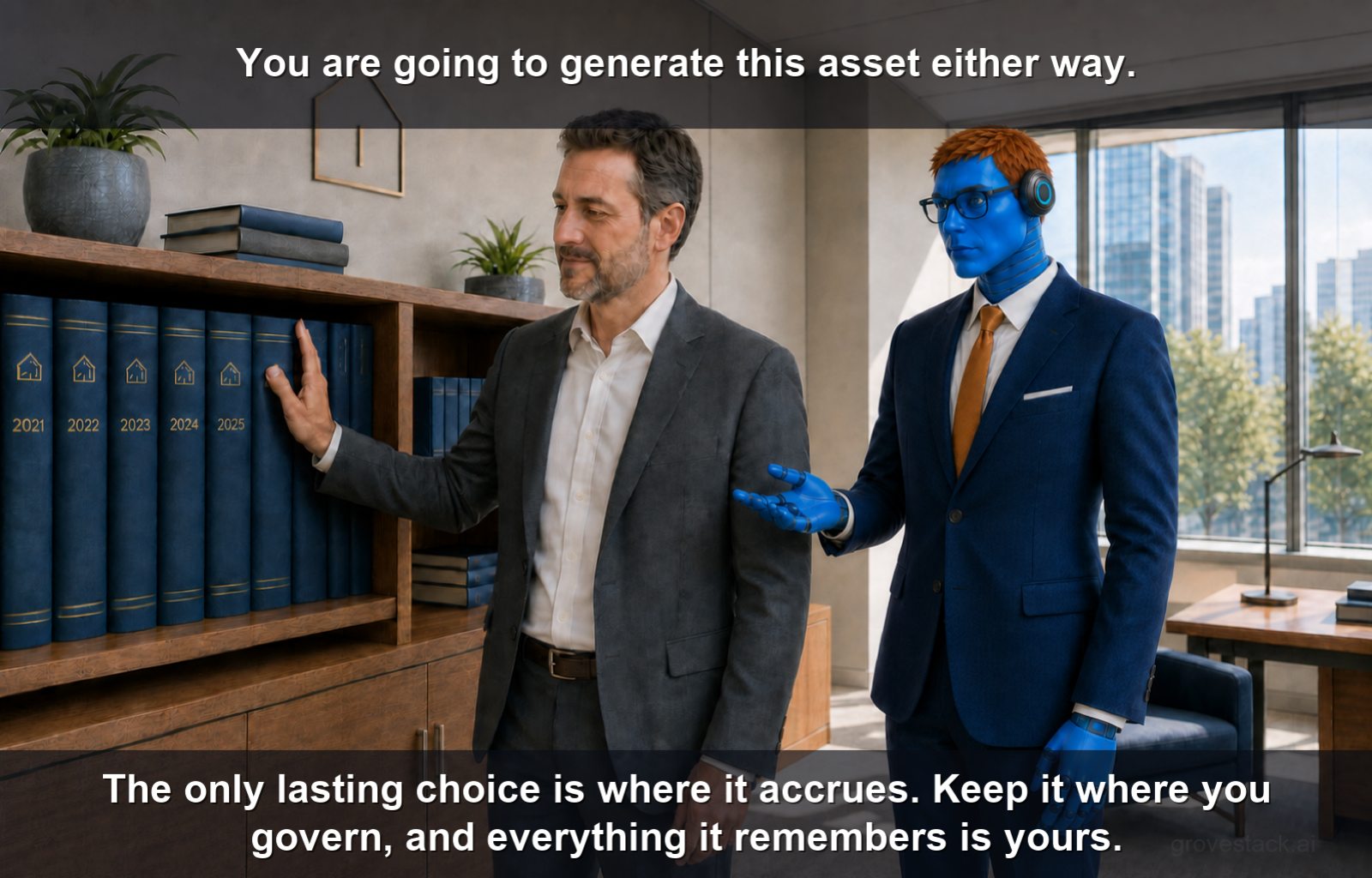
Every time one of your AI agents does a real piece of work, it leaves something behind that is worth more than the work itself. Not the finished task; the task is the smallest part of what just happened. What carries the real value is the record of how the task got done: which judgment was made, against which constraint, following whose convention, and for what reason. Do that once and it is a footnote. Do it ten thousand times and you have written down, in fine and compounding detail, how your organization actually operates. That record is an asset, one of the most valuable a modern company can hold. And most companies are giving it away without ever noticing they own it.
The memory has to land somewhere
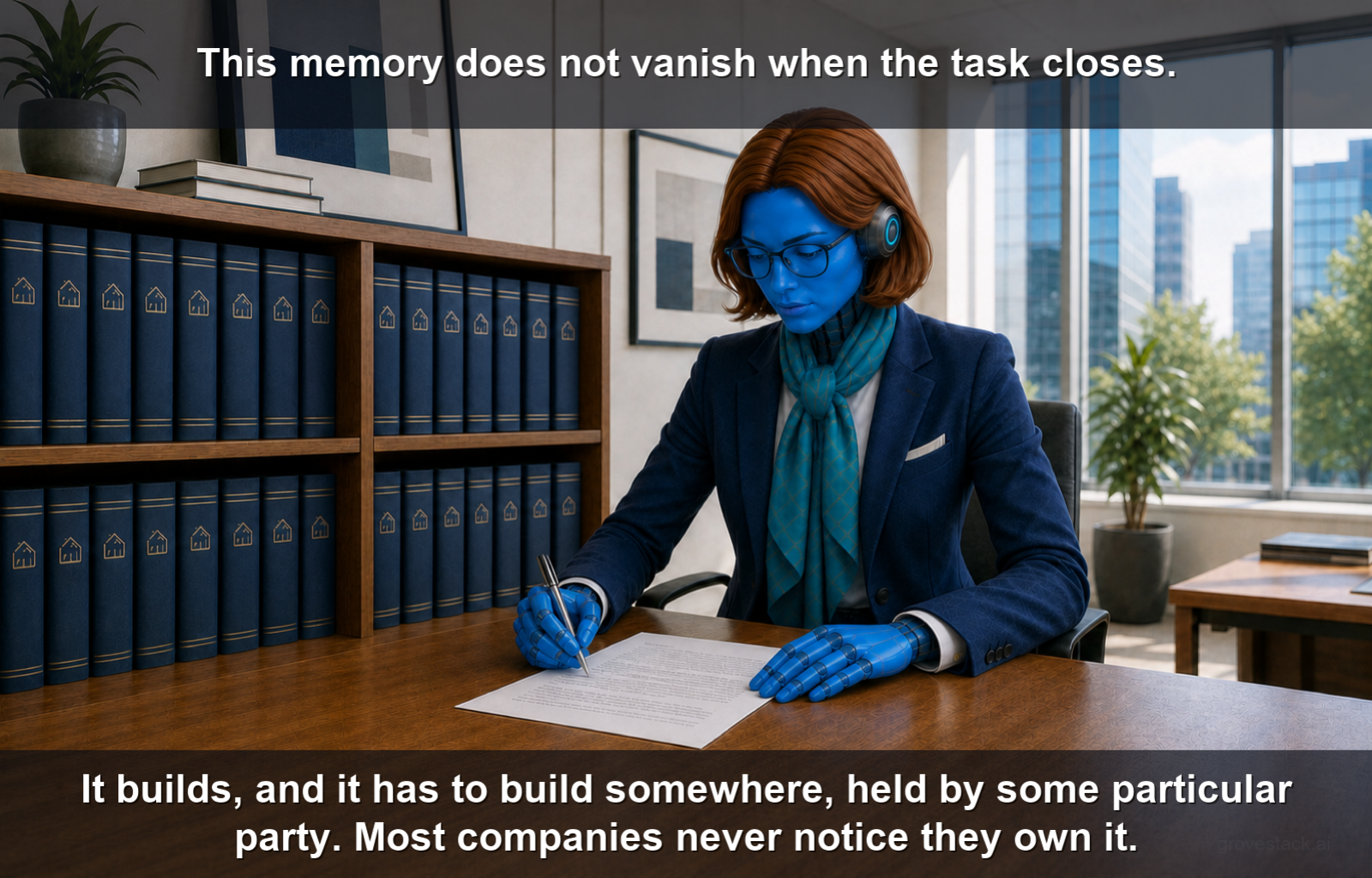
Here is the part almost no one is tracking. As you lean more heavily on AI, this behavioral memory of your business accumulates. It does not evaporate when the task closes; it builds. And it has to build somewhere, in some particular place held by some particular party.
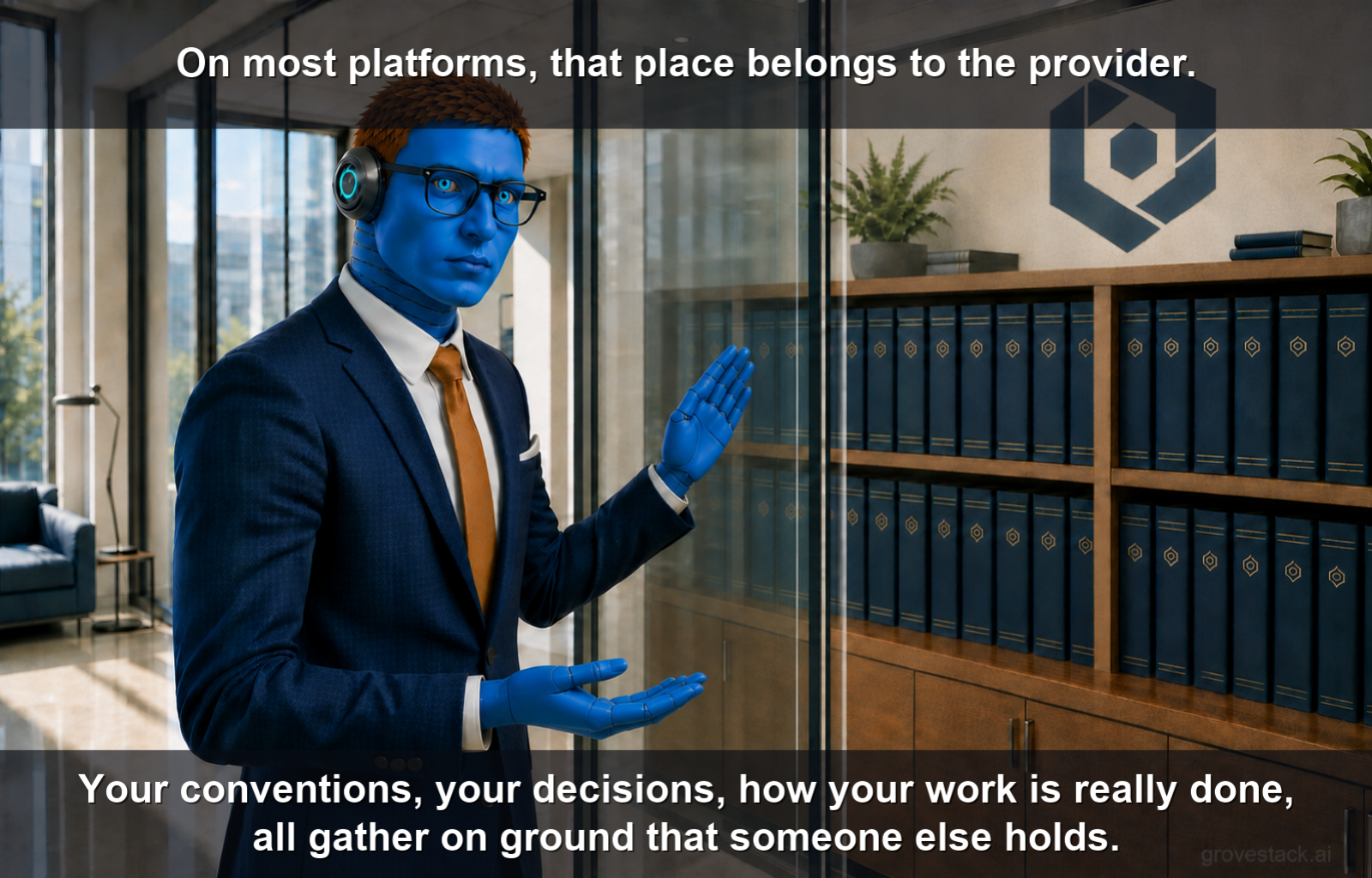
On the common platforms, that place belongs to the provider. Your conventions, your decision patterns, the hard-won particulars of how your work is really done, all of it gathers on ground that someone else holds. The result is a quiet inversion that would trouble any executive if it were ever stated plainly on a slide: you end up paying for access to an increasingly detailed portrait of yourself, kept by a company that is not you. The more useful the tool becomes, the more of your own operating memory settles on the far side of a boundary you do not control.
It does not have to land there
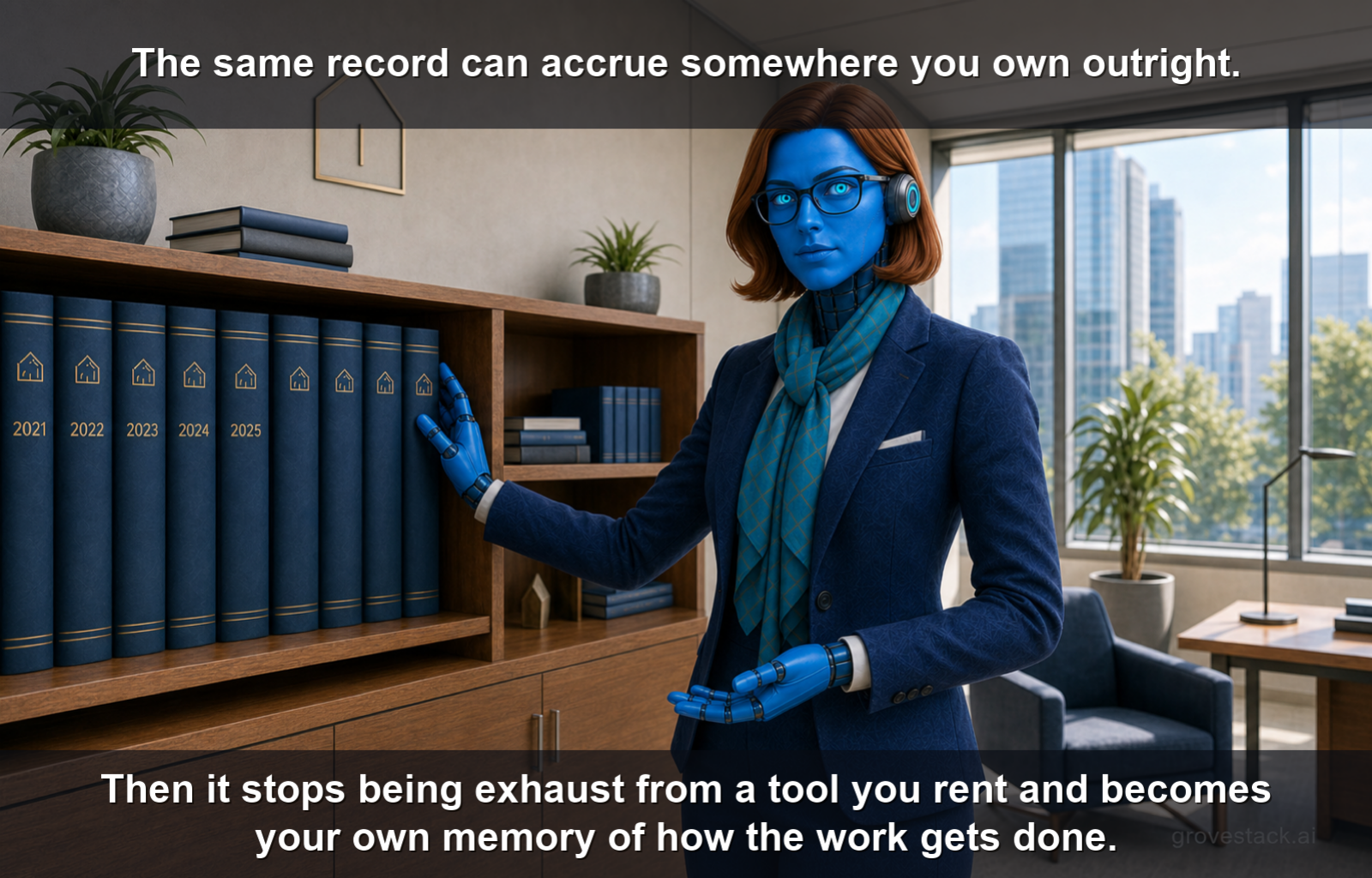
None of this is inevitable. The very same record can accumulate somewhere you own outright, and when it does, its meaning changes completely. It stops being exhaust thrown off by someone else's tool and becomes what it always was underneath: your institution's own memory of how it works, held by the institution that did the work.
A company that owns that record can do things a company that does not own it simply cannot. It can read its own operating history and learn from it deliberately. It can improve on it. It can carry it forward into the next system it adopts, on its own terms, instead of starting over each time. And it never has to ask anyone's permission to understand itself. That last capacity is easy to underrate, right up until the day you need it and find that the clearest picture of how your company works lives somewhere you cannot reach without a negotiation.
Why the compliance story is not the whole point
This is why the compliance frame, useful as it is, was always the near-term version of a larger idea. A record built so that normal work is its own evidence does answer the hard question an audit puts to you, and that alone can justify building it. But the deeper reason to want that record is that it is quietly the most valuable thing your AI adoption is producing, and unlike most assets, its value compounds. Each decision it captures makes the next one more legible. Each year of it makes the organization more able to explain itself to itself.
Run that forward a few years and the distance between a company that owns this memory and one that does not stops being a line on a compliance report. It becomes something closer to a difference in kind: whether the organization can still account for how it operates without a provider in the room, or whether the truest description of the business has quietly become someone else's property.
The only decision that lasts
So underneath all the noise about which model and which platform and which tool, there is a quieter and far more durable question. You are going to generate this asset either way. The work is already producing it, today, with every task an agent completes for you. The only choice that really lasts is where it accrues.
Put the intelligence somewhere the record of what it learns about you belongs to someone else, and you have handed your own memory to a stranger for safekeeping. Put it somewhere you govern, and the arrangement finally sits the right way around: the smartest thing in the building is working for you, and so is everything it remembers.