
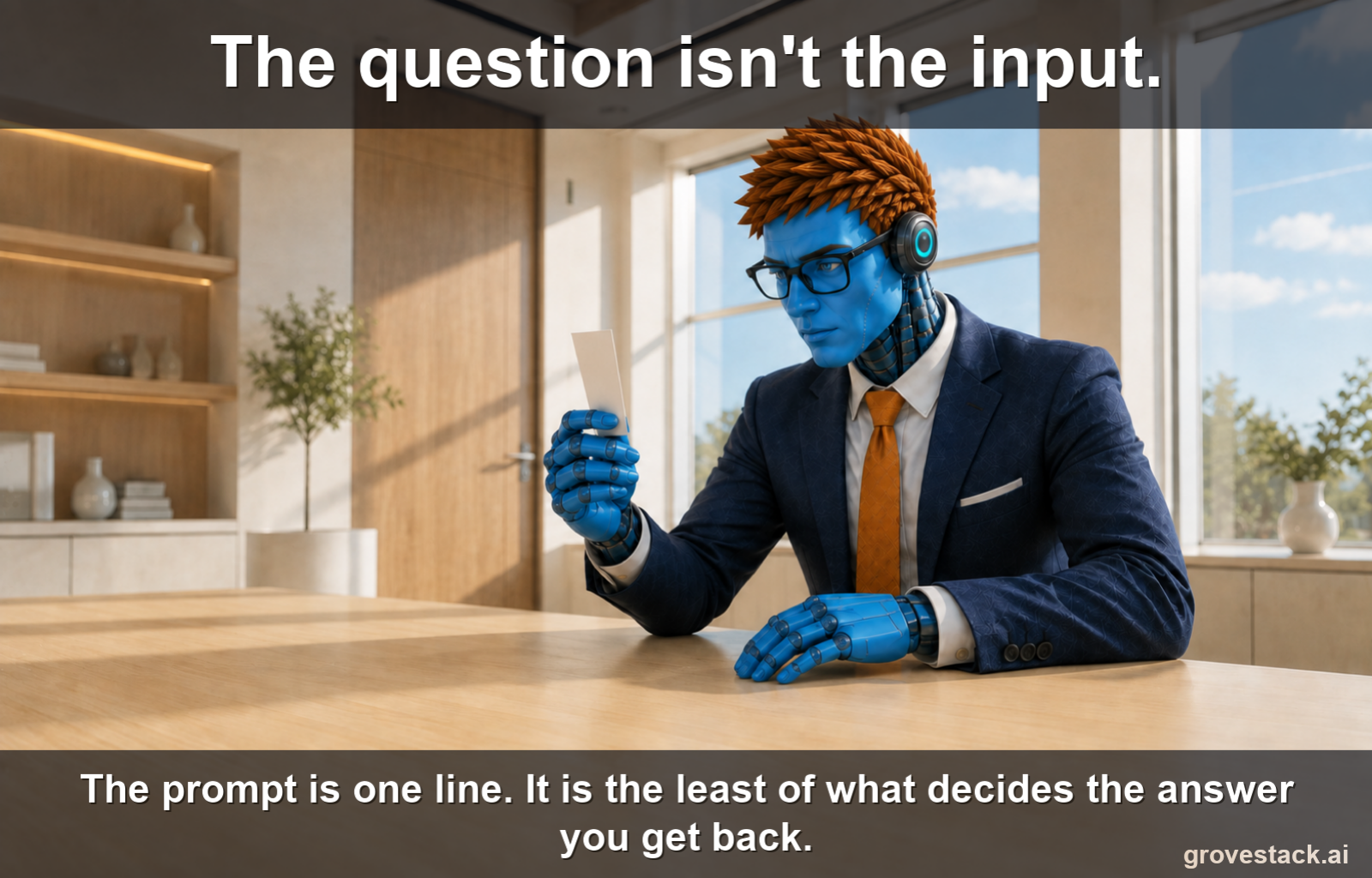
By now you have heard that the trick to getting good work out of an AI is asking it the right way. Phrase the request well and the machine performs; phrase it badly and it flails. There is a small industry of advice built on this, and none of it is exactly wrong. It is just aimed at the wrong part of the problem. The prompt, the actual question you type, is one line. It is the least of what decides the answer you get back.
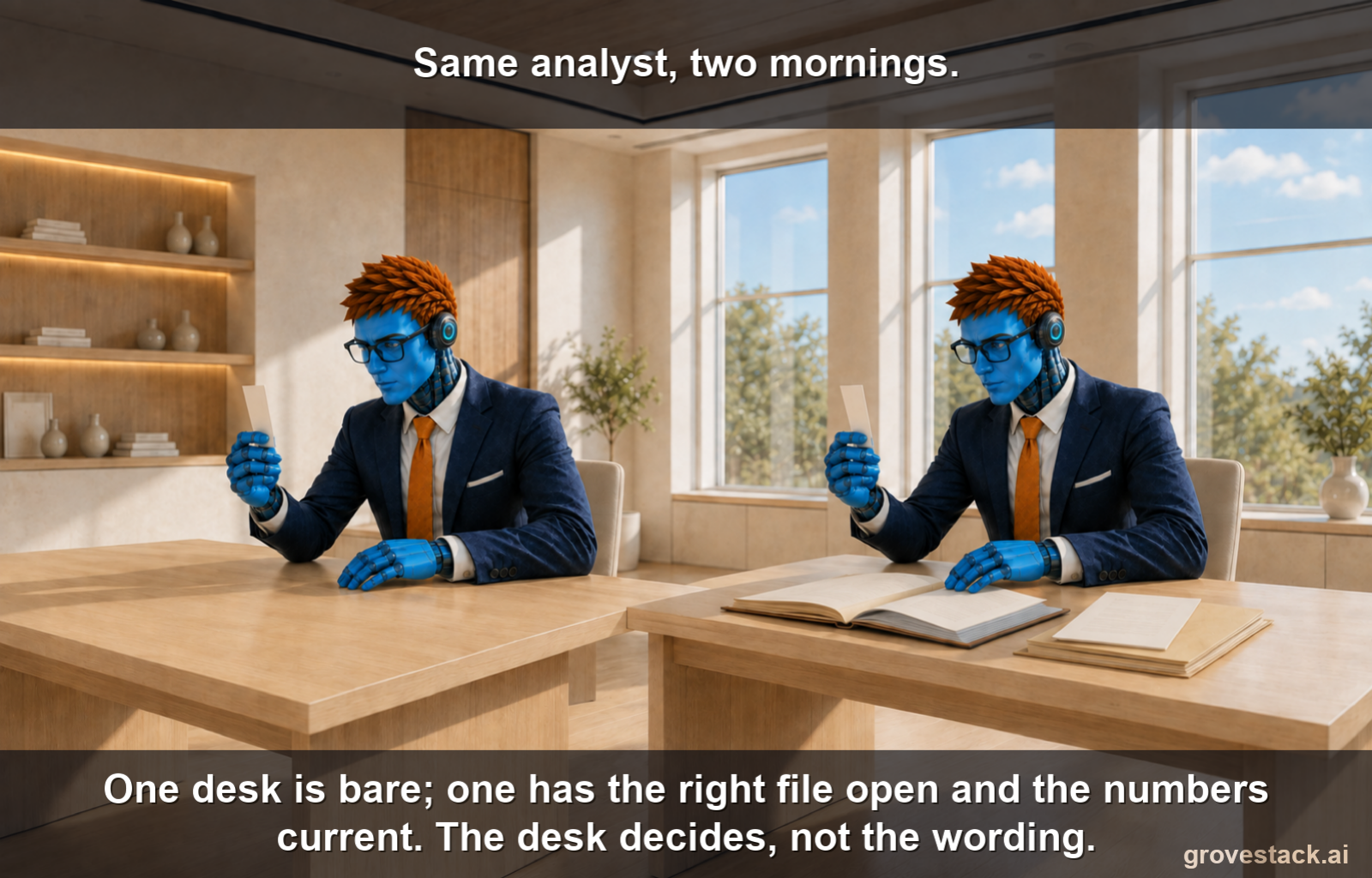
Picture a capable analyst and two versions of the same morning. In the first, they sit down to an empty desk: no files pulled, no account history, no record of what was decided last week, no line to the live numbers. Just your question and whatever they carry in their own head. In the second, the same analyst sits at a desk where the relevant file is already open, the customer's history is laid out, last quarter's decisions are summarized on top, and today's figures are current. You put the identical question to both, a sharp and well-formed one, exactly what the business needs answered. Same analyst, same question, word for word. You will get two completely different answers, and the difference has nothing to do with how you phrased the question.
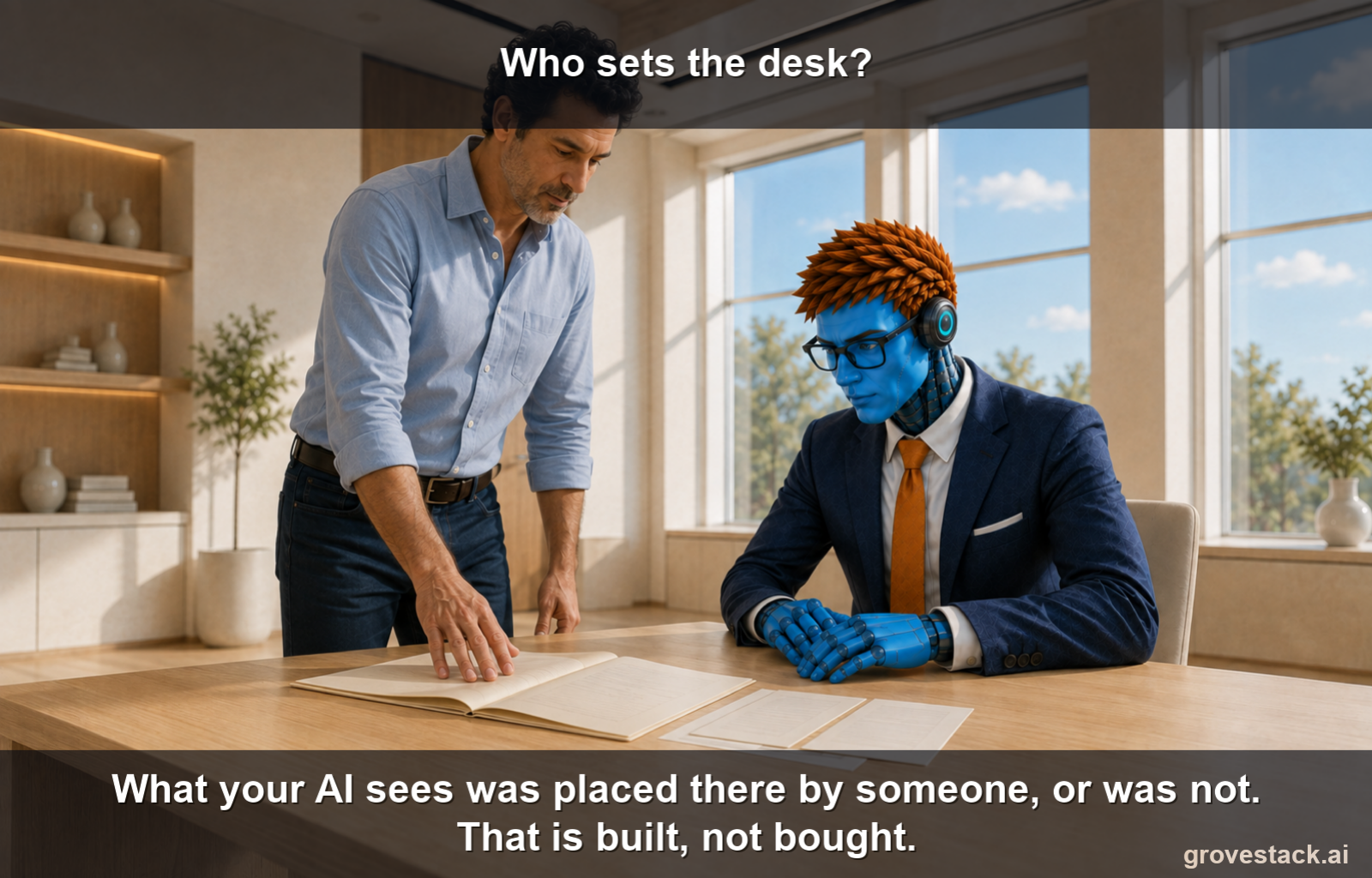
The desk is the thing that matters, and almost no one running a business has been taught to look at it. Engineers have a name for it, the context window, but the name matters far less than the plain fact under it: when an AI answers, it is not reaching into some vast well of everything it knows. It is answering from what is in front of it at that exact moment, whatever has been placed on the desk and nothing else. The prompt is one item on that desk. Everything else on it, the documents, the records, the history, the current state of things, was put there by someone, or was not.
So the question worth carrying through all of this is not "are we prompting the AI well." It is quieter and much larger. What does your AI actually see when it answers, and who decides what goes on the desk? Because someone does. Every time one of these systems produces an answer, some arrangement of information was assembled in front of it first, and that arrangement did more to shape the answer than any wording of the request could. If you do not know how that assembly happens in your own company, you do not actually know why your AI is right on Tuesday and badly wrong on Wednesday, with the same tool and the same people.
Better questions to an empty desk
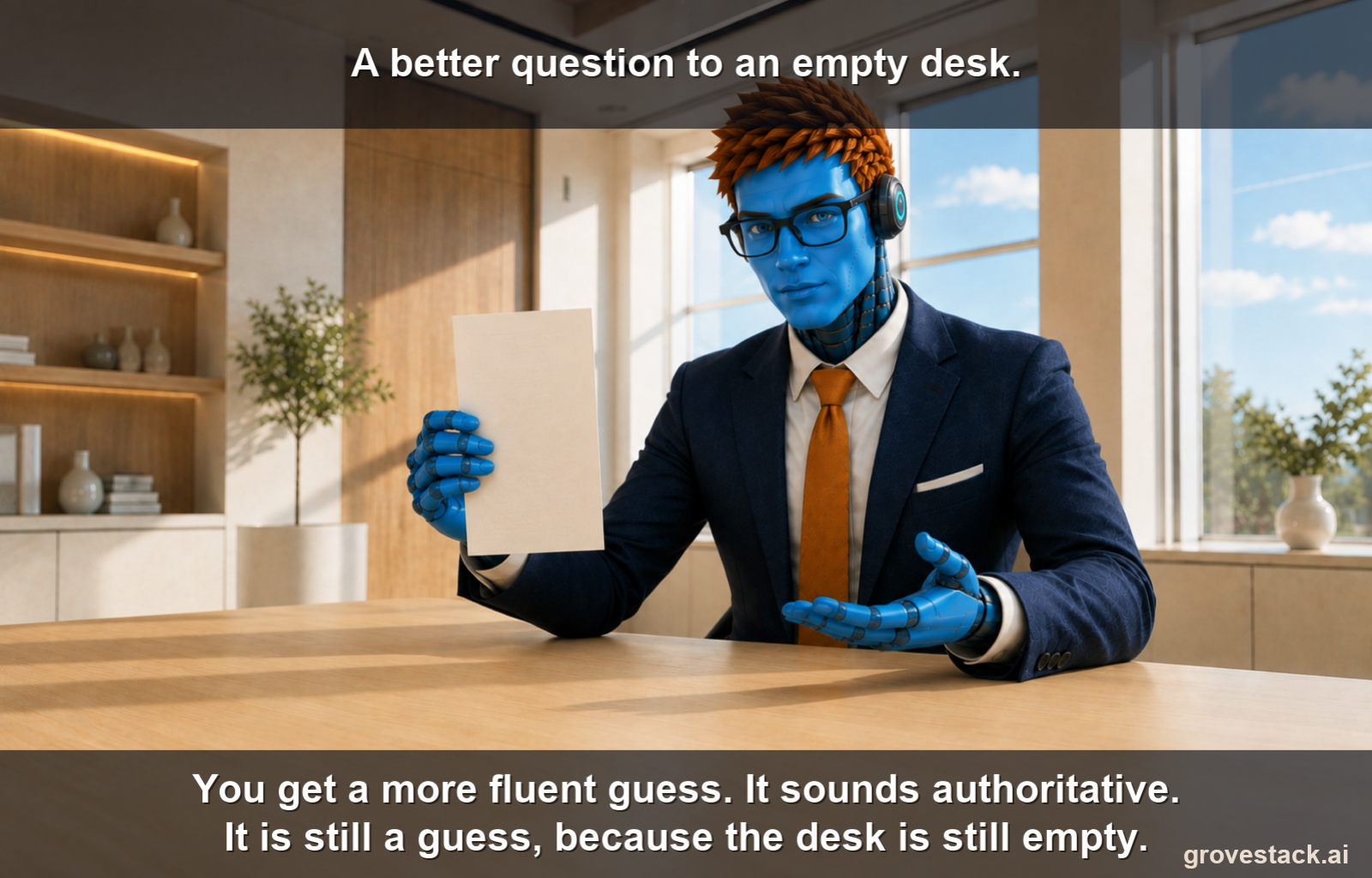
This is why the advice to write better prompts, pursued on its own, quietly disappoints the people who follow it. A better question put to an analyst at an empty desk gets you a more articulate guess. The person is sharp, so the guess comes out fluent and well-structured and sounds authoritative. It is still a guess, because the desk is still empty. Refining the question does not put the missing file on the desk. It cannot. No amount of care in how you ask makes up for material that was never there to answer from, and the more polished the guess, the harder it is to tell from a real answer, which is the part that costs you. An obvious gap you can catch. A confident, well-worded answer built on nothing you can only catch if you already knew what the desk was missing.
The same tool, two companies
Turn it over and the same fact wears a better face. If the answer is mostly decided by what reaches the desk, then two companies can license the identical AI, the same model from the same vendor on the same terms, and get results that are not remotely comparable. One of them has quietly gotten good at putting the right things in front of the machine at the right moment: the relevant policy, the specific customer, the current number, the decision from last week. The other types questions into a box and hopes. The tool is a commodity; both bought it off the same shelf. What separates the outcomes is not the tool. It is everything arranged around it before it answers, and that is not something you purchase. It is something you build.
That is worth sitting with if you are the one signing for the AI, because it moves the whole question of value off the thing you were shopping for. You were comparing models. The gap that will actually decide whether this pays off is not between models at all. It is between a business that has taken control of what its AI sees and one that has left that to chance, and those two businesses can be running the very same model.
Where this goes
None of this tells you yet how the right things are supposed to get onto the desk, and that is deliberate, because it is the whole of what comes next. For now it is enough to have moved the question. The thing that decides the quality of your AI's work is not the cleverness of the request. It is the completeness and freshness of what the system can see when it answers, and the judgment of whoever decides what that is. So start asking it, of any AI your business leans on: when this thing answers, what is actually on the desk in front of it, and who put it there?
For the technical version of this same idea, written for the people who build these systems, see Your AI Is Only As Good As Its Context. Everything after this stays up here, in the language of the person who has to decide whether to trust the thing.